
Bonsai in Japan
The Kokufu-ten, Japan's most prestigious bonsai exhibition
The Kokufu-ten is Japan's most prestigious bonsai exhibition. Every February, about 300 trees chosen by a jury are shown in two parts at the Tokyo Metropolitan Art Museum in Ueno. In 2027, part one runs February 8 to 11 and part two February 13 to 17: allow two hours per part, and come early in the morning.
Adrien Pichon · Bonsai professional · Ten years in Japan
Published 12 September 2026
What is the Kokufu-ten?
The Kokufu-ten is where Japan shows the very best of its bonsai. It’s held every February in Tokyo, and it has been running since 1934. It’s organized by the Nippon Bonsai Kyōkai, the Japanese association of bonsai owners and enthusiasts. The 100th edition was held in February 2026, which makes February 2027 the 101st.
One thing to understand before you go: the Kokufu-ten is an exhibition put on by professionals, for owners. The label in front of each tree carries the owner’s name, never the name of the professional who looks after it all year.
I first went in 2016, for the 90th edition. Walking in, what I felt was that it was overwhelming. There’s so much to take in. After a hundred or so displays, you’ve had enough: you need a break just to get your thoughts back. I’ve gone back every year since, and everyone I take there feels the same.
When is the 2027 Kokufu-ten?
The 101st Kokufu-ten runs in two parts in February 2027:
| Part | Dates | Hours |
|---|---|---|
| Part one | Monday February 8 to Thursday February 11 | 9:30 a.m. to 5:30 p.m. |
| Part two | Saturday February 13 to Wednesday February 17, except Monday the 15th | 9:30 a.m. to 5:30 p.m. |
Last entry is at 5 p.m. On the last day of each part, the 11th and the 17th, it closes early: last entry at 3 p.m., closing at 3:30 p.m. It’s closed on Friday the 12th, when the trees are swapped, and on Monday the 15th, when the museum is closed.
Tickets are ¥1,000 for one part, or ¥1,500 for a combined ticket that gets you into each part once. It’s ¥500 for university students, and free for high school students and younger. These details come from the Nippon Bonsai Kyōkai’s official announcement: check them again just before you travel.
Why is February 12 closed? Because that’s the day the professionals come in to take down the 150 or so displays from part one and set up the 150 for part two. So every year, about 300 trees are shown.
Where is the Kokufu-ten held?
At the Tokyo Metropolitan Art Museum, in Ueno Park, a few minutes’ walk from Ueno station. The very first edition was held here in 1934, when the building was still called the Tokyo Prefectural Art Museum.
Once inside, you go down two escalators to the main hall, where the exhibition starts. You zigzag from one aisle to the next, then go up a floor to finish with the medium and small trees.
Should I see both parts of the Kokufu-ten?
The two parts show different trees, about 150 displays each. In anniversary years, like the 100th edition, there are a few more.
For a first visit, one part is plenty: it’s already a lot. If you’re an enthusiast and your trip allows it, buy the combined ticket and come back for the second.
How long should I plan, and when should I go?
Allow two hours to see every tree without rushing. Two and a half if it’s crowded. Less than an hour and a half, and you won’t see everything.
Come early in the morning. Like any museum, it’s calmer at the start of the day. The first days of each part draw crowds, because everyone wants to see it first. Then there are a day or two that are quieter, before the weekend brings the crowds back. The other option is late in the day, as long as you can finish before closing.
When I started, in 2016 and 2017, there were hardly any tourists. Only people in the know came. Since then, with social media and the 100th edition, the atmosphere has changed: it’s packed. But this is Japan, so it stays calm. Nobody pushes.
When I take people who are new to bonsai, I do the visit in about an hour. We stop at the trees that won awards, and at the ones that help explain something. That way even complete beginners get the essentials.
How do you look at a tree at the Kokufu-ten?
Start with size. More than half the exhibition is ōmono, the large trees. You’re not used to seeing so many, and that’s what hits you first. Then come the chūhin, the medium trees, and the shōhin, the small ones. Their quality is just as incredible.
Then the season. The Kokufu-ten is held in February for a reason: deciduous trees, like maples, have no leaves. You can see their ramification, their skeleton. That’s when a deciduous tree really shows its beauty. For conifers, which keep their needles, you look at other things.
Finally, the display. A tree is never alone: there’s its pot, its stand, and often a companion plant. The label gives the owner’s name, the tree’s name, the pot and the companion plant. That’s all.
In 2024, at the 98th edition, I stopped with a group in front of a hinoki, a Japanese cypress. Its shape put you straight into a Miyazaki film: it was the tree from Totoro. Grandeur for the tree, smallness for those of us looking at it. That’s exactly what bonsai is trying to show: great nature, made small. A whole world in a pot.
Another time it was a rock planting, with junipers swept by the wind. You felt you were on the Japanese coast, on those beaches lined with trees whipped and bent flat by the gusts. You get a sense of movement just by looking at the tree.
What most visitors miss
At the Kokufu-ten, a lot goes unsaid. The label is minimal. The rest you know because you know the tree, the owner or the professional, and you have information that isn’t on display.
An example. An owner can only show one tree. At the 100th edition, in 2026, two trees stood side by side under the same family name: one in the husband’s name, the other in his wife’s. A couple of great collectors who have supported the art for a long time. The two displays answered each other beautifully. A visitor who can’t read kanji misses it completely.
Something else not to miss: there are always at least two trees from the Imperial collection. They’re shown on the middle level, between the end of the ōmono and the start of the chūhin, in front of a special screen. They look different from the others, far more natural: very little wiring, very little styling. You let the tree grow and only cut what needs cutting. It’s another way of doing bonsai, and a fascinating one.
One last piece of advice. You sometimes hear someone in front of a tree say, “I wouldn’t have done it that way.” If a tree is at the Kokufu-ten, a jury of leading Japanese professionals has judged it worthy of the very best. When something surprises you, it usually means you’re missing part of the picture. Better to try to understand than to criticize.
How does a tree get into the Kokufu-ten?
The professional who looks after the tree submits it, on behalf of its owner. They pay a first fee to put it before the jury. The jury votes on every tree submitted and keeps the highest scoring, about 300. A second fee is paid to exhibit.
The same tree can’t come back every year: there must be at least three years between two showings.
Can you take photos at the Kokufu-ten?
Yes, today, without flash. And never touch the trees.
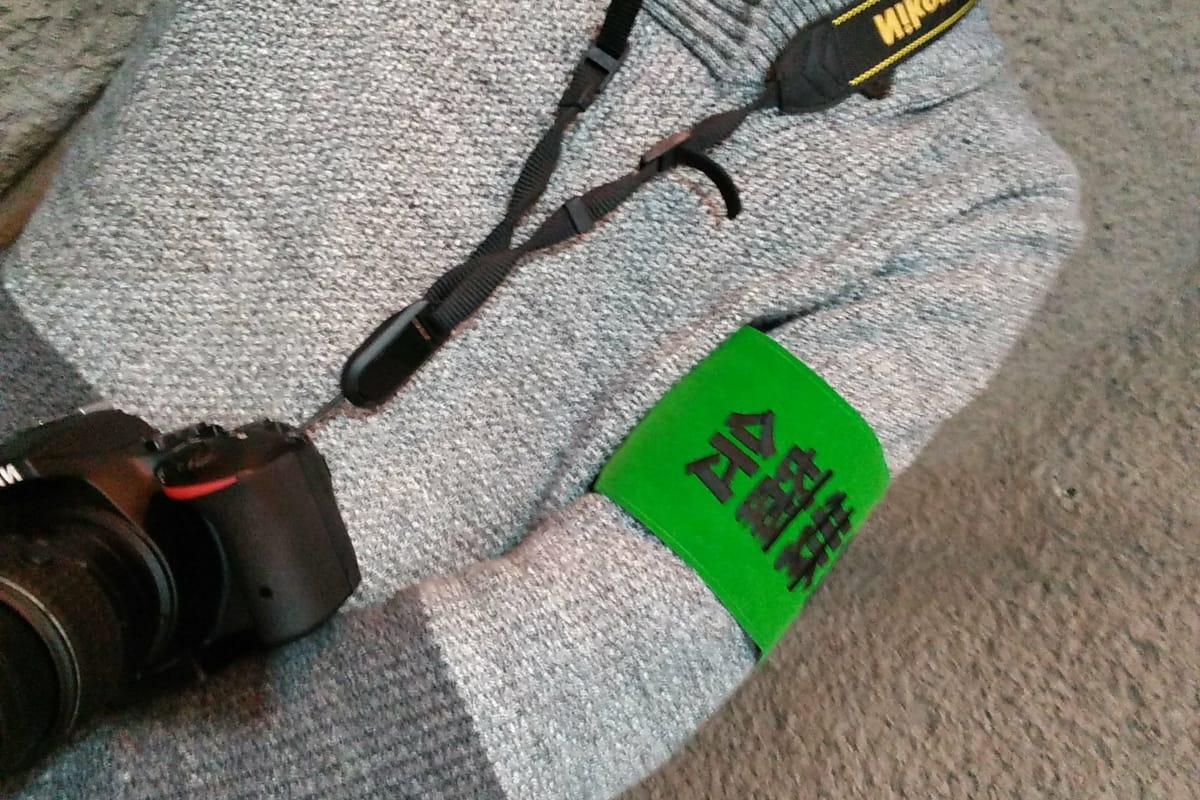
It wasn’t always that way. In 2017 I showed up with my camera to shoot a video for my YouTube channel, and was told it wasn’t allowed. I ran into Makiko Kobayashi, a bonsai journalist who was handling the press at the time. She got me a press pass. For two or three years I was one of the few people able to film the Kokufu-ten and share the footage. Then the association opened photography to all visitors. Those who want a complete record buy the official catalogue. If you want to know how I got there, I tell my story here.
How old are the trees at the Kokufu-ten?
It’s the question everyone asks. In Japan, the age of a tree isn’t put on the label, because it’s almost never reliable information. Very few trees have been documented from the start of their life.
A bonsai may have started in a pot, from a seed or a cutting. But it may also have been collected from the mountains: a yamadori, which often spent a long first life in the wild. Who can say since when?
Japanese professionals have an eye that lets them estimate an age, in decades or centuries, from the bark, the shape, the branches. It’s a good estimate, nothing more. In my view, anyone who tells you a tree’s age with certainty is wrong.
Can you buy a bonsai during the Kokufu-ten?
Yes. During the exhibition, a big sale is held at the Ueno Green Club, outside Ueno Park: the baiten. Many of the professionals have a stand, and a lot of them set trees aside for months to bring them there. It’s where you’ll find the most choice of the whole year, including trees you won’t see anywhere else. It’s not always the best price: there’s a premium at the baiten.
But be careful: these trees aren’t in quarantine. None of them can go straight to Europe. A tree bought at the baiten has to be handed to an export professional. That’s my job, with Tree House Bonsai, the garden I’m a partner in.
Here’s the timeline, in our practice, for a tree that goes through the full process to France. You buy it in February 2027. It enters quarantine at the garden in April 2027 and has to spend two growing seasons there, 2027 and 2028. It can leave in the autumn of 2028. The journey takes about three months. A deciduous tree, like a maple, is delivered as soon as it arrives, between January and March 2029. A juniper stays in official quarantine in France until June 30: it’s released in July 2029. The whole process, and which species are allowed, is explained in my guide to bringing a bonsai home from Japan.
What else is there to do during Kokufu-ten week?
North of Tokyo, in Saitama, the Omiya Bonsai Village brings together several historic gardens and the Omiya Bonsai Art Museum. On the eastern edge of Tokyo, Kunio Kobayashi’s Shunka-en museum is well worth a visit. Tree House Bonsai, in Ibaraki prefecture, is an hour to an hour and a half from Ueno.
Tokyo’s great Japanese gardens are worth seeing too, even though they don’t show bonsai. They’re about nature, staging, a whole world: it’s interesting to compare the two aesthetics.
Further out, less than two hours from Tokyo, there are nurseries where you can buy. They aren’t display gardens. You need to know people to get in.
One important detail: during Kokufu-ten week, every professional is at the Kokufu-ten. You can visit the gardens, but you won’t meet the pros there. They’re at the exhibition or at the baiten.
How many days should I plan for a first visit?
You need a full day for the Kokufu-ten and the baiten if you want to take your time. Another day for Omiya and one garden outside it, for example Shunka-en or Tree House Bonsai. So two days of bonsai, and the rest of your stay in Tokyo however you like.
The big dates of the year, from the Gafu-ten in January to the Taikan-ten in November, are on my Japanese bonsai calendar. I’ll be at the Kokufu-ten in February 2027, as I am every year.
Questions
- Where is the Kokufu-ten held?
- At the Tokyo Metropolitan Art Museum, in Ueno Park, Tokyo. The exhibition has been held there since its first edition in 1934.
- What are the dates of the 2027 Kokufu-ten?
- Part one runs from Monday February 8 to Thursday February 11, 2027, and part two from Saturday February 13 to Wednesday February 17. It's closed on the 12th, when the trees are swapped, and on the 15th, when the museum is closed.
- How much are tickets for the Kokufu-ten?
- ¥1,000 for one part, or ¥1,500 for a combined ticket covering both. ¥500 for university students, and free for high school students and younger.
- Can you take photos at the Kokufu-ten?
- Yes, without flash. That wasn't allowed until a few years ago. Never touch the trees.
- Should I see both parts of the Kokufu-ten?
- The two parts show different trees, about 150 displays each. For a first visit, one part is plenty. Enthusiasts buy the combined ticket.
- Can I buy a bonsai at the Kokufu-ten and take it home?
- You can buy at the baiten, the big sale held nearby. But those trees aren't in quarantine: they have to go through an export professional, and it takes about two years before a tree reaches France.