
Bonsai in Japan
When to go to Japan to see bonsai
You can go any time of year: every season has its trees and its exhibitions. Winter for the Kokufu-ten and the structure of bare trees; spring and early summer for nurseries in full swing; autumn for the colours of the maples. The one period to avoid: mid-July to mid-August, too hot and too humid.
Adrien Pichon · Bonsai professional · Ten years in Japan
Published 14 September 2026
What is the best season to see bonsai in Japan?
When a friend asks me when to go, I say: whenever you like. Every season has its own character, and there’s always something beautiful to see.
But Japan is Japan, and some months are more pleasant than others. Winter, if you can come around the Kokufu-ten. Spring, for sure. Early summer, very good. Autumn, absolutely fantastic, and early winter too. The only real mistake is the height of summer.
After that, it all depends on your plans and how much time you have.
Winter: the season of structure
In winter, deciduous trees have lost their leaves. It’s the time to visit gardens to see their structure: the trunk, the ramification, the scars if there are any. Maples, momiji, look superb then. That’s also why the Kokufu-ten, Japan’s most prestigious exhibition, is held in February.
Conifers keep their winter green, and it’s very pretty. In a garden that specialises in pines, in Takamatsu for example, you’ll see the same garden as in midsummer. In a deciduous garden, you’ll see bare trees, and that’s the whole point.
The other advantage of winter in Japan is that it’s very dry. It hardly rains. The days are short, but beautiful, bright, and not that cold. It’s very pleasant.
Spring and early summer: nurseries in full swing
From March to May, professional nurseries have just brought in their new stock. Everyone is labelling, watering, pruning, getting ready for the selling season, which runs from March to September. Repotting was done over winter and at the very start of spring.
This is when professionals come to buy, so they’re ready to ship their containers at the end of the year. Every year a little earlier: you see whole sections of nurseries already sold. It’s a bit of a race.
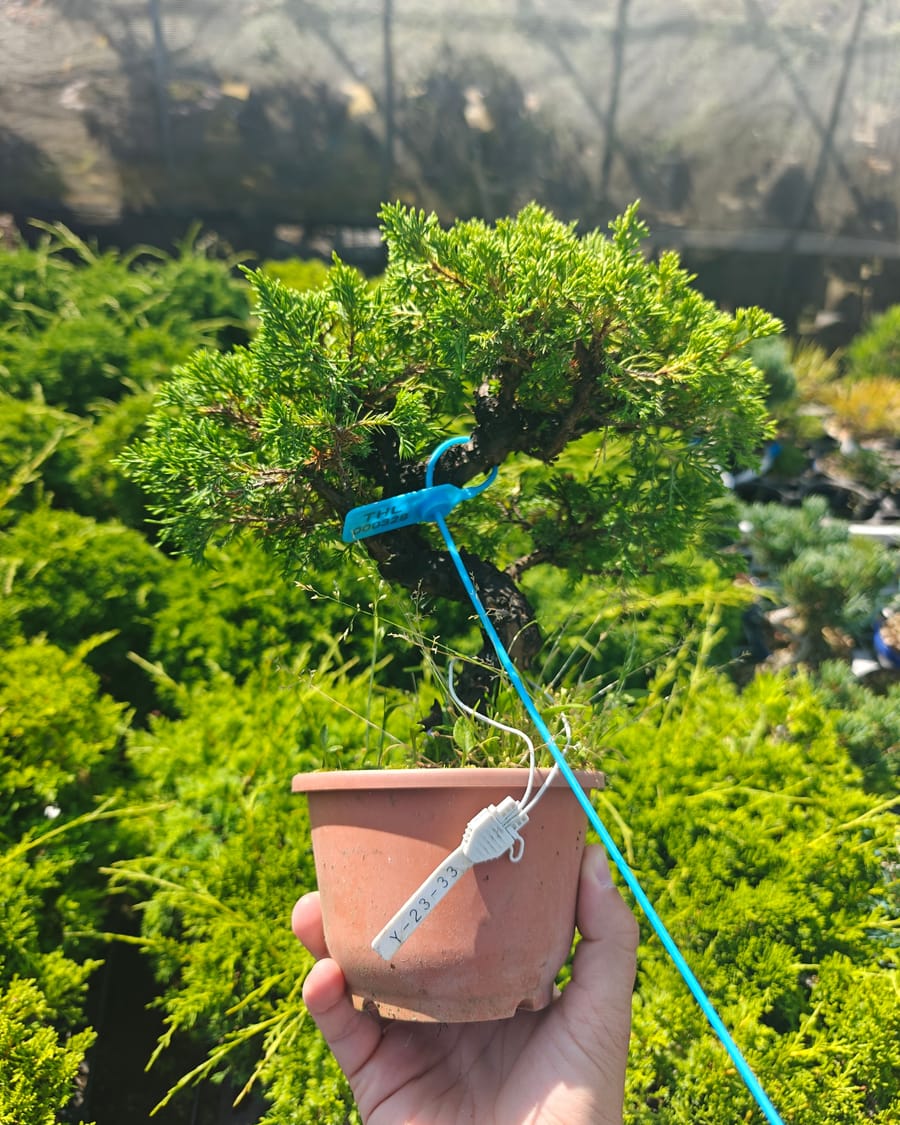
There are two kinds of nursery. Those with an export system, some of whose trees are already in quarantine and ready to leave within the year. And all the others, even more numerous, whose trees aren’t in that system. The latter are worth visiting all year, but a tree bought from them first has to do its quarantine with an export professional. The whole process is explained here.
A tree that’s in the export system carries an official tag that identifies it. So when you look at a tree, you know whether it can leave this year or not.
Summer: the one period to avoid
The turning point is tsuyu, the rainy season. Around Tokyo it starts on average in early June and ends around mid-July, according to the Japan Meteorological Agency. Every garden is visited in the rain, and it’s already hot and very humid.
Then comes the height of summer, from mid-July to mid-August. In Tokyo the average high is over 30°C in both July and August, and recent summers have often gone above 35°C. It feels like 40 degrees and 100% humidity. It’s unbearable. Don’t come then, simple as that.
Come before tsuyu instead, or in autumn. In September and October it can still rain: those are the autumn rains, akisame.
Autumn: the season of colour
Autumn is all about deciduous trees, especially maples. You watch the colours change on the trees, from green to yellow, orange and red. The colours you know from Japanese nature, you find in bonsai too, with extraordinary shades.
It’s also the season for certain fruiting trees: the princess persimmon, rōyagaki, a small persimmon from China with orange fruit in October and November. Or Japanese beautyberry, murasaki shikibu, with its little purple berries.
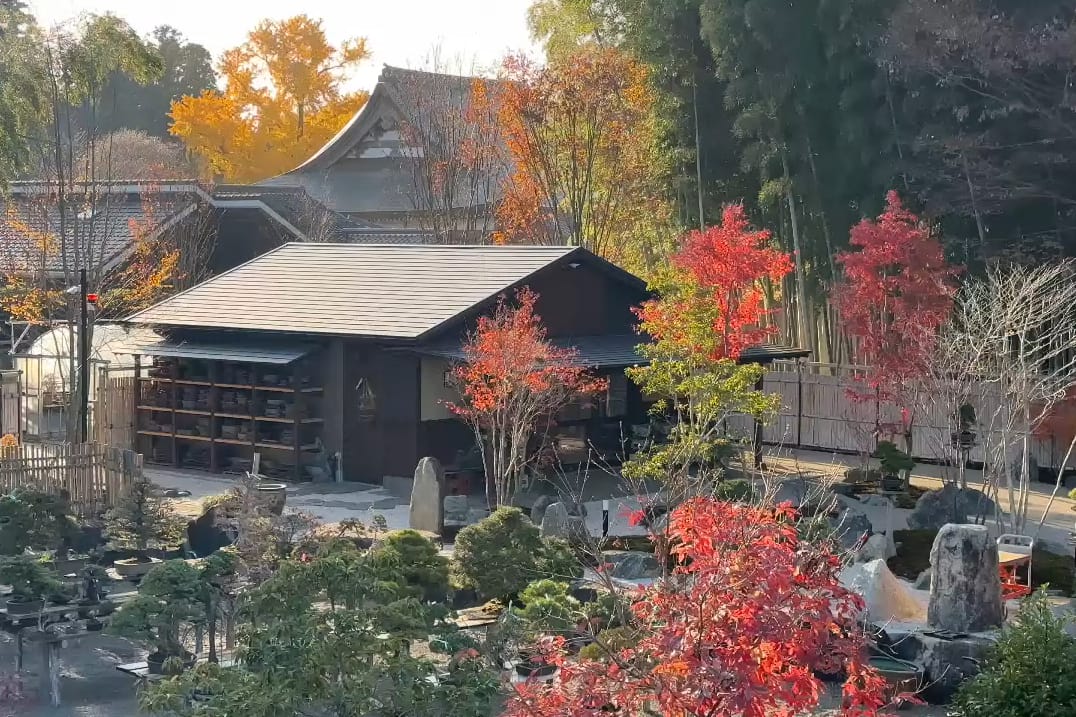
My strongest memory is autumn at Tree House Bonsai, the garden I’m a partner in. A professional bonsai garden is often a plot squeezed between buildings, with benches covered in trees. At Tree House Bonsai you’re in a fortress of nature, surrounded by forest: bamboo, cypress, hinoki, cedar. Adam Jones created a landscaped garden there in the Kyoto style, even though you’re next to Tokyo. The bonsai benches are small places within a big place. A mini Japan inside Japan, with the bonsai in the middle. The colours, the calm: my best memories of Japan are there.
My favourite season is late autumn and early winter. You see the mountains turn from red, orange and green, and then you move into a cold season, but a dry one. I ride a motorbike, and that’s road trip time: from Tokyo to Hakone, or, longer and even more beautiful, across the Nagano mountains to the Sea of Japan side, around Niigata.
Those landscapes change the way you look at a tree. Bonsai is nature made small. Seeing Japanese nature means understanding where the inspiration of generations of masters who created bonsai came from. And understanding that inspiration means understanding better what you then see in a pot.
Which exhibitions to see, and when?
The Kokufu-ten, in February, in Tokyo. Japan’s most prestigious. The 101st edition runs February 8 to 17, 2027. My full guide to the Kokufu-ten.
The Sakufu-ten, in Tokyo, at the Ueno Green Club, usually in December. In 2026 the 52nd edition is earlier, October 10 to 12, according to the professionals’ association. It’s the professionals’ show, by professionals. Everywhere else, professionals exhibit their clients’ trees, and it’s the owner’s name on the label. At the Sakufu-ten, they exhibit under their own name, as artists, a tree they’ve worked on for years. It’s the professionals’ big occasion. Among the prizes awarded is the Prime Minister’s Prize.
The Taikan-ten, in November, in Kyoto, at Miyako Messe. In 2026 the 46th edition runs November 20 to 23, according to the professionals’ association.
Between September and June there are also regional exhibitions, roughly every two weeks. I mostly know the ones in Kanto and northern Kanto. I’ll put together a fuller calendar, based on past editions.
All the big dates are also on my Japanese bonsai calendar.
When should I come to buy a tree?
Between April and September, if you want it to leave for Europe within the year. You can choose a tree already in the quarantine system, which will ship in autumn. Or a tree that will leave next year, or the year after, if you can wait. If you can wait one, two or even three years, a lot more doors open.
From October to December, on the other hand, it’s export season. The professionals who guide buyers, and the gardens themselves, are busy with preparations. If you come then to buy, you’ll be told politely that it isn’t the best time to tour the gardens. Come just before, or just after.
Periods to avoid
Japanese public holidays. During Golden Week, late April and early May, Obon, around mid-August, and New Year, some gardens work and others are closed. Bonsai gardens are businesses, and you have to allow for that. It’s also when travel costs more.
Major exhibitions, if you want to see the masters. During a big exhibition, those who exhibit are there, not in their gardens. You need to plan well ahead to see both the exhibition and the owners at home. That’s where a professional makes the difference: some masters agree to let us visit their garden while they’re away. Not all of them: it’s case by case.
A word of honesty, finally. Someone coming to Japan for the first time to buy a bonsai, even with a guide, is still a stranger to the gardens. Don’t expect to be treated like royalty: you’re not a client yet, and nobody knows whether you’ll buy. That’s normal, like in any trade. A returning client gets more attention than someone seen for the first time.
How many days should I plan?
There’s no right answer: everyone has their own plans. If you have one day, we do a day of bonsai. If you have a week, we do a week.
With one day in Tokyo, I take you to Omiya: the museum and four to six gardens. With the distances and the car, we can add one more garden, for example Shunka-en, Kunio Kobayashi’s, or Tree House Bonsai. No more.
With a week, we can go further, depending on what you like: Masahiko Kimura’s garden, in Ina, Saitama prefecture, Fukaya, a little further on, Kanuma, the satsuki town, Nagano, where Shinji Suzuki works, or further south, Takamatsu, the capital of pines. There are dozens of gardens, and we build the programme together.
Questions
- What is the best season to see bonsai in Japan?
- There isn't just one. Winter shows the structure of the trees and brings the Kokufu-ten, spring shows the nurseries in full swing, autumn shows the colours of the maples. Only the height of summer is best avoided.
- Should I avoid summer for a bonsai trip to Japan?
- From mid-July to mid-August, yes. The heat and humidity make garden visits very hard going. Better to come before the June rainy season, or in autumn.
- Can I visit gardens during the Kokufu-ten?
- Yes, but the masters are at the exhibition. You need to plan well ahead. With a professional, some gardens can be visited even when their owner is away, case by case.
- When should I go to Japan to buy a bonsai and receive it the same year?
- Between April and September, choosing a tree that is already in the export quarantine system. From October to December, gardens are busy preparing shipments.
- When are the major bonsai exhibitions in Japan?
- The Kokufu-ten in February in Tokyo, the Taikan-ten in November in Kyoto, and the Sakufu-ten, the professionals' exhibition, in Tokyo, usually in December but in October in 2026. Between September and June there are also regional exhibitions roughly every two weeks.